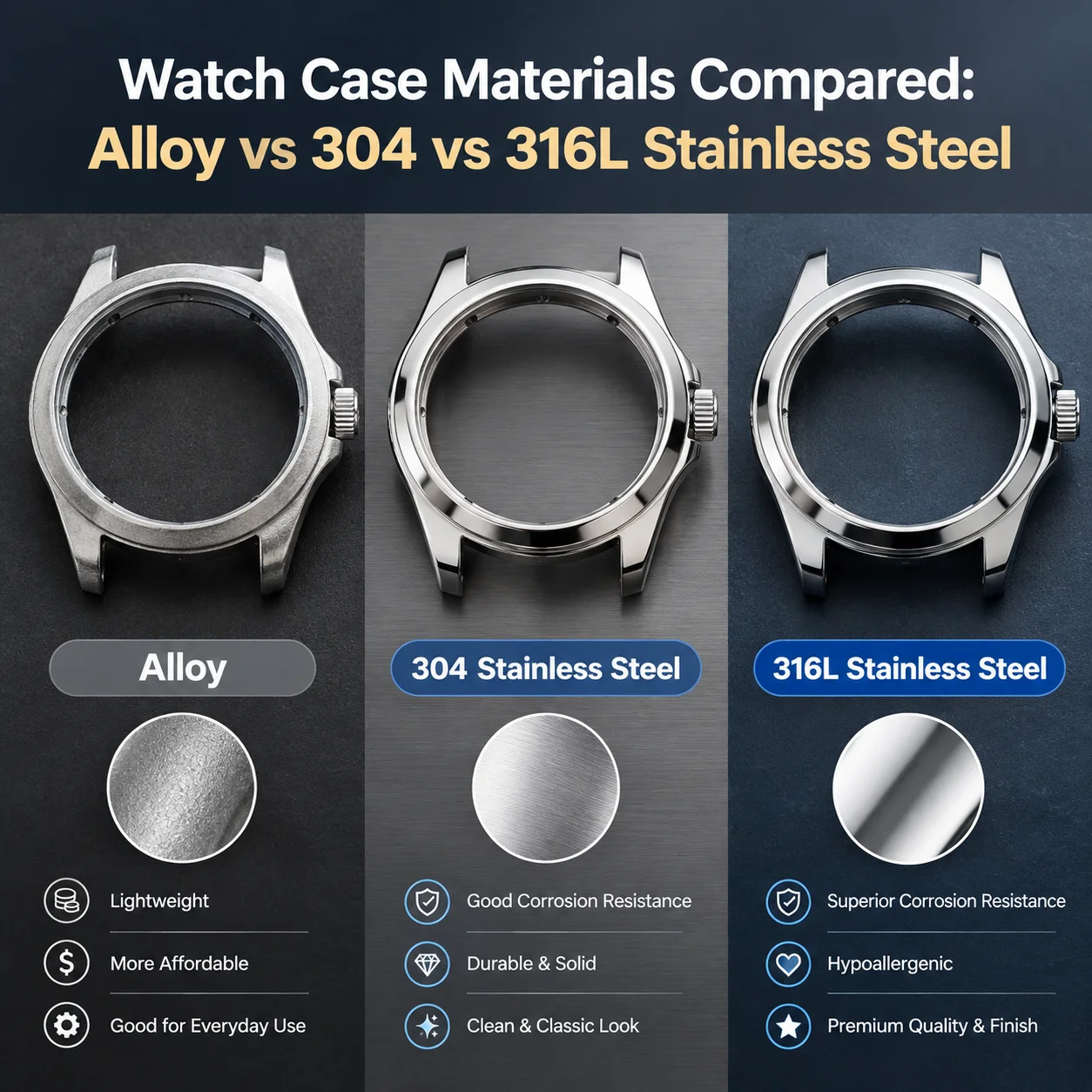
Watch Case Materials Compared: Alloy vs 304 vs 316L Stainless Steel
Short answer: 316L stainless steel is the best case material in the affordable watch segment — it is more corrosion-resistant and skin-friendly than 304 steel, and far more durable than zinc alloy. Alloy cases keep prices low; 316L is what you should demand when positioning a model above entry level. Here is the full comparison.
The three common case materials
Property | Zinc alloy | 304 stainless steel | 316L stainless steel |
Cost | Lowest | Medium | Higher |
Weight | Light | Medium | Medium-heavy |
Corrosion resistance | Low–medium (plating-dependent) | Good | Excellent (adds molybdenum) |
Skin reaction risk | Higher (nickel release if plating wears) | Low | Very low (surgical-grade) |
Durability / scratch behavior | Soft, dents easily | Hard | Hard |
Typical segment | Entry fashion (USD 3–8 factory price) | Mid-range fashion | Mid-to-premium (most branded sports watches) |
What the differences mean in practice
Zinc alloy
Alloy cases are die-cast, cheap, and easy to shape into complex designs — which is why they dominate the sub-USD 10 wholesale segment. Their weakness is plating dependence: the base metal is protected only by its plating layer, so worn plating can expose skin to nickel release and cause discoloration. Fine for promotional watches; risky for models positioned as durable.
304 stainless steel
The most common steel in general manufacturing. It offers good corrosion resistance for everyday wear and holds plating and polish well. Most mid-range fashion watches use 304 for cases and bezels.
316L stainless steel
The medical-grade ("surgical") steel used by nearly every serious watch brand. Adding 2–3% molybdenum dramatically improves resistance to chlorides — meaning sweat, seawater, and humidity. It is also hypoallergenic for the vast majority of wearers. When a sports watch advertises "316L case," that is a genuine quality signal, not marketing filler.
How to verify on a sample
- Weight test: 316L feels noticeably denser than alloy of the same size.
- Magnet test: austenitic stainless steels (304/316L) are essentially non-magnetic; alloys often attract a magnet weakly depending on composition. (Not definitive, but a useful first filter.)
- Ask for the material certificate. Established factories can state case material per SKU on the spec sheet — a supplier that cannot answer "304 or 316L?" is a red flag.
- Sweat test on samples: wear the sample for a week. Alloy plating issues show up as green/gray skin marks.
Buying guidance by retail positioning
- Sub-USD 15 retail, promotional/fashion: alloy cases are acceptable — price them as disposable fashion.
- USD 15–40 retail, everyday wear: 304 steel cases and bracelets.
- USD 40+ retail or "sports/pro" positioning: 316L case + 5ATM water resistance minimum. This combination is the recognized standard in the branded sports watch segment.
Reference sources
- Stainless steel composition standards (AISI 304 / 316L) as commonly applied in watch manufacturing.
- Watches Factory product catalog — case materials specified per model: watches-factory.com/Products
More Knowledge

quartz-vs-mechanical-watches-which-should-a-b2b-buyer-stock-
watch-case-materials-compared-alloy-vs-304-vs-316l-stainless-steel
mechanical-watch-daily-care-maintenance-guide

how-to-replace-a-quartz-watch-battery-step-by-step-guide-watches-factory
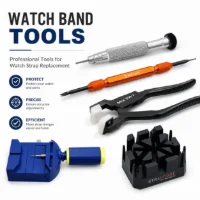
essential-watch-band-tools-for-strap-replacement-and-bracelet-adjustment
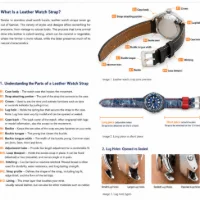
leather-watch-strap-guide-parts-sizes-profiles-how-to-choose