Leather Watch Strap Guide: Parts, Sizes, Profiles & How to Choose
Leather watch straps are a timeless choice, just like stainless steel watch bands. With a wide range of materials, colors, finishes and designs available, leather straps can complement everything from vintage dress watches to rugged everyday timepieces.
Leather is produced through a process known as tanning. Two common methods are mineral tanning and vegetable tanning. Mineral-tanned leather is generally more robust, while vegetable tanning helps preserve more of the leather's natural characteristics.
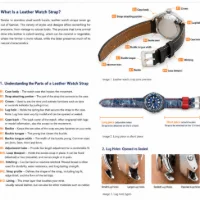
Understanding the Parts of a Leather Watch Strap
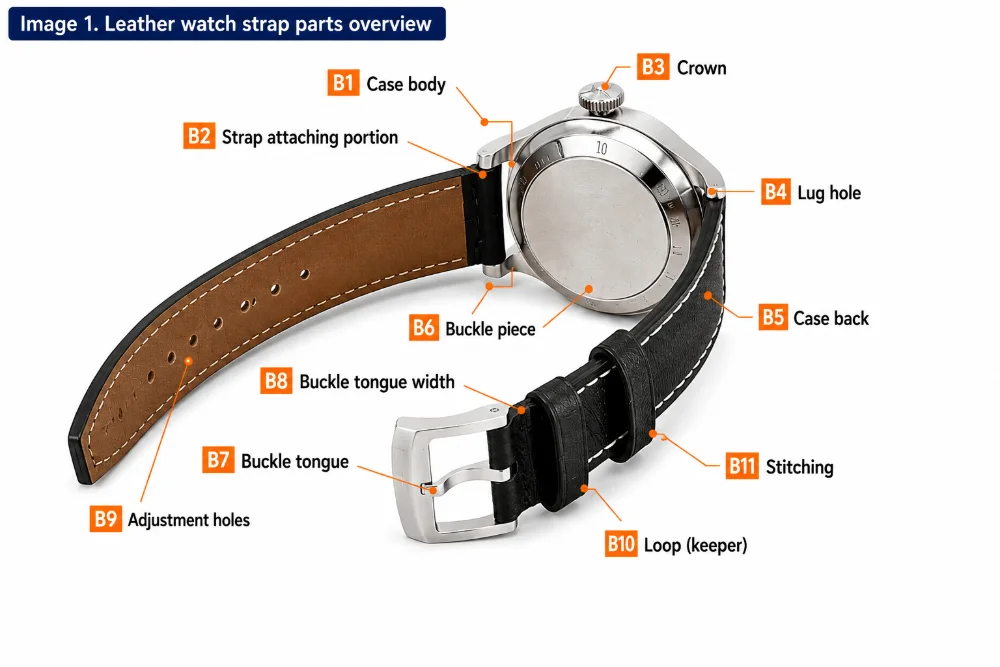
Knowing the basic components of a watch and leather strap can make it much easier to select the correct replacement strap.
1. Case Body
The case body is the main watch case that houses and protects the watch movement.
2. Strap Attaching Portion
This is the section of the watch strap that connects directly to the watch case.
3. Crown
The crown is used to adjust the time. Depending on the watch, pulling the crown to different positions may also allow you to adjust functions such as the date.
Long Piece and Short Piece of a Watch Strap
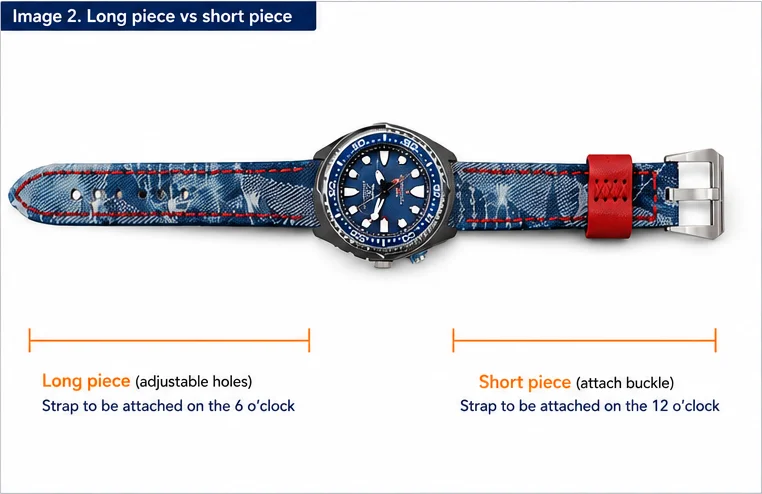
A standard two-piece leather watch strap consists of a long piece and a short piece.
The long piece contains the adjustment holes and is normally attached to the 6 o'clock side of the watch.
The short piece carries the buckle and is normally attached to the 12 o'clock side.
Understanding this orientation is particularly useful when replacing or installing a new leather watch band.
Watch Lug Holes: Sizes and Types
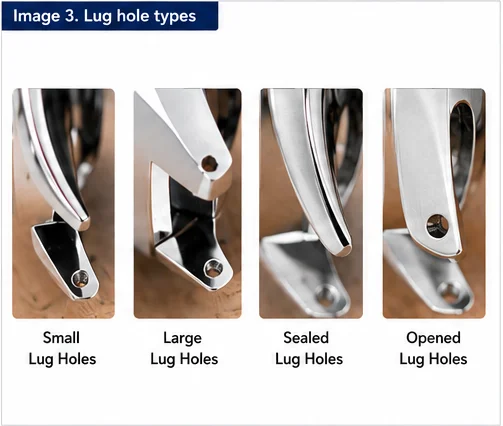
4. Watch Lug Hole
The lug hole holds the spring bar that secures the watch strap to the watch case.
Lug-hole dimensions can vary between watch models, so it is important to check the dimensions and construction of your watch before replacing the strap.
Watch cases may also feature opened lug holes or sealed lug holes. This distinction can affect how easily the spring bars and watch strap can be installed or removed.
If your watch has sealed lug holes, pay particular attention when selecting straps or bracelets with metal tubes or designs that provide limited access to the spring bars.
Case Back, Buckle and Buckle Tongue
5. Case Back
The case back is the rear cover of the watch. It often provides access to the watch movement and may feature engraved information such as the brand logo, model number or other product details.
6. Watch Buckle
The buckle keeps the two sides of the watch strap securely fastened around your wrist.
Watch straps can use many different buckle systems, including tang buckles, folding buckles, deployment clasps, butterfly deployment clasps, ladder-lock buckles and slider buckles.
7. Buckle Tongue
The buckle tongue, also known as the buckle pin or prong, passes through an adjustment hole to secure the strap around the wrist.
Watch Buckle Tongue Width
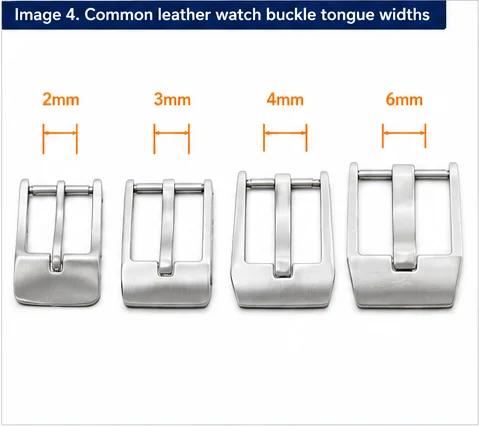
8. Buckle Tongue Width
Buckle tongue width is another detail to consider when matching a buckle with a leather watch strap.
Common leather watch buckle tongue widths include:
2mm / 3mm / 4mm / 6mm
Choosing the correct size helps ensure that the buckle tongue fits the strap properly and operates smoothly.
Adjustment Holes, Keepers and Stitching
9. Adjustment Holes
The adjustment holes allow the wearer to fine-tune the effective length of the watch strap for a comfortable fit.
10. Fixed Loop and Free Loop
Watch strap loops, also called keepers, hold the excess length of the strap in place.
A fixed loop is attached permanently to the strap, while a free loop can move along the strap. Depending on the design, a watch strap may use one keeper or a combination of fixed and free keepers.
11. Stitching
Leather watch straps may feature either hand stitching or machine stitching.
Stitching can serve both functional and decorative purposes. Waxed thread is commonly associated with hand stitching because waxing can make the thread firmer, more resistant to moisture and less prone to stretching.
Leather Watch Strap Profiles and Tip Shapes
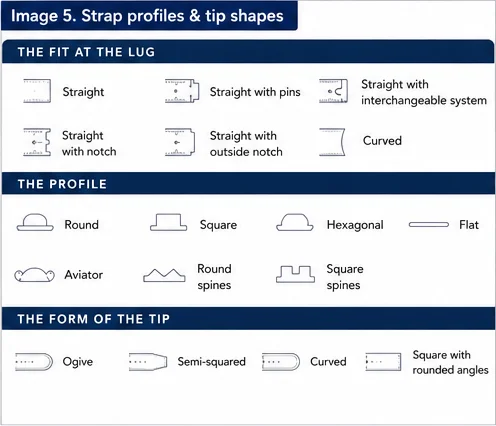
12. Watch Strap Profile
The profile determines the overall shape and construction of a watch strap. This includes how the strap fits at the watch lugs, its edge profile and the shape of the strap tip.
Common lug-fit designs include Straight, Straight with Pins, Straight with Notch, Straight with Outside Notch, Straight with Interchangeable System, and Curved.
Common strap profiles include Round, Square, Hexagonal, Flat, Aviator, Round Spines, and Square Spines.
The end or tip of the leather strap can also have different shapes, including Ogive, Semi-Squared, Curved, and Square with Rounded Angles.
Leather Watch Strap Lining
13. Lining
The lining is the inner layer of the leather watch strap—the surface that comes into direct contact with the wrist.
Natural leather is one of the most commonly used lining materials, although other materials, including rubber, may also be used depending on the strap design and intended application.
How to Choose the Right Leather Watch Strap
When selecting a replacement leather watch strap, check the lug dimensions, lug-hole design, strap length, buckle dimensions and overall strap profile.
The right combination of leather, stitching, lining, buckle and profile can provide a more comfortable fit while also complementing the style of the watch.
For watch brands, wholesalers and OEM/ODM buyers, these specifications are also important when developing custom leather watch straps because even small dimensional differences can affect compatibility and the finished appearance of the watch.
More Knowledge

quartz-vs-mechanical-watches-which-should-a-b2b-buyer-stock-
watch-case-materials-compared-alloy-vs-304-vs-316l-stainless-steel
mechanical-watch-daily-care-maintenance-guide

how-to-replace-a-quartz-watch-battery-step-by-step-guide-watches-factory
essential-watch-band-tools-for-strap-replacement-and-bracelet-adjustment
leather-watch-strap-guide-parts-sizes-profiles-how-to-choose
stainless-steel-watch-bands-guide-parts-clasps-materials-finishes
FAQ
Measure the lug width, strap length, and buckle dimensions before choosing a replacement leather watch strap. The strap should match the watch lug dimensions and provide a comfortable fit around your wrist.
The long piece contains the adjustment holes and is normally attached to the 6 o’clock side of the watch. The short piece carries the buckle and is normally attached to the 12 o’clock side.
Common leather watch buckle tongue widths are 2mm, 3mm, 4mm, and 6mm. Choosing the correct tongue width helps ensure that the buckle fits the leather strap properly and functions smoothly.


