Mechanical Watch Daily Care & Maintenance Guide
As masterpieces of precision engineering, mechanical watches rely on both manufacturing excellence and proper daily handling to maintain long-term performance. To help B2B partners, distributors, and retailers better educate end consumers, extend product lifespan, and lower post-sale service issues, this guide outlines essential operational standards covering daily wear, winding, storage, and cleaning.
1. Four Core Protective Principles: Water, Shock, Magnetism & Temperature
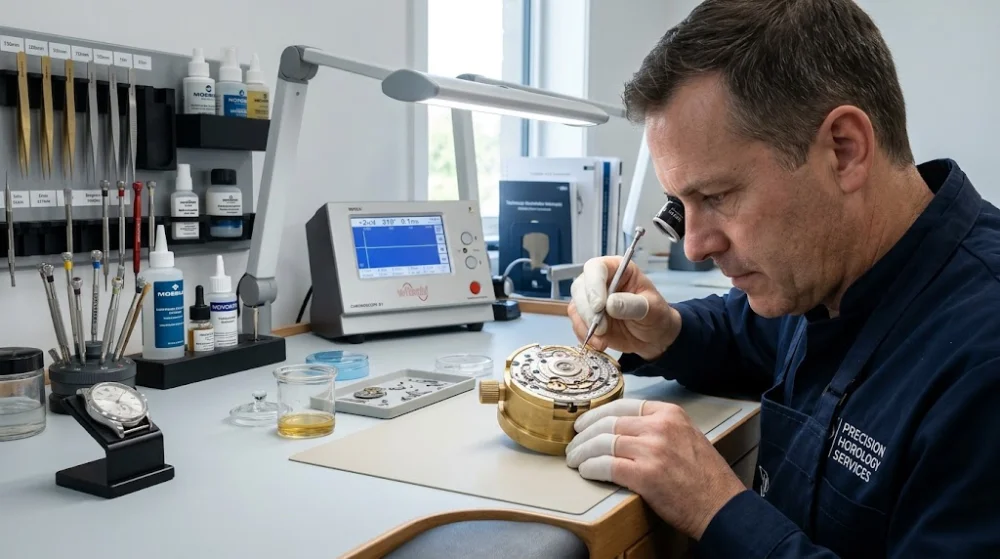
A mechanical timepiece contains hundreds of delicate components that are sensitive to external environmental factors. Guiding customers on these four key principles is critical to preventing movement damage:
Water Resistance Limits: Even if a watch is rated as water-resistant, users should strictly avoid wearing it during hot showers, hair washing, saunas, or hot springs. High temperatures and steam cause rubber gaskets to expand and degrade prematurely, allowing moisture to enter and damage the movement.
Shock Prevention: Core components such as the balance wheel and hairspring are highly precise and sensitive. Timepieces should be removed during strenuous sports or physical labor to protect internal mechanisms from heavy impacts.
Magnetic Field Shielding: Everyday electronics such as microwave ovens, smartphones, laptops, and electric shavers generate magnetic fields. Prolonged exposure can magnetize internal parts and disrupt timekeeping accuracy. If magnetized, the watch should be processed using professional demagnetizing tools.
Sunlight & Temperature Control: Avoid leaving timepieces in direct sunlight or near heat sources for extended periods. Extreme hot or cold temperatures deteriorate movement lubricants, causing inaccurate timekeeping and potential dial discoloration.
2. Winding Rules and the Date-Setting "Danger Zone"

Adhering to correct winding and adjustment practices ensures smooth power transmission and protects internal gearing from accidental stress.
Manual Mechanical Watches: For initial use or after stopping, gently turn the crown clockwise 20 to 30 times to build baseline power. Winding the watch at a consistent time every day helps maintain stable energy output.
Automatic Mechanical Watches: These models wind themselves via a weighted rotor driven by wrist motion. Wearing the watch for at least 8 hours daily generally maintains a stable power reserve. If activity levels are low or the watch has stopped, manual winding via the crown can restore initial power.
The Date-Setting "Danger Zone": Never adjust the date or time between 21:00 (9:00 PM) and 03:00 (3:00 AM). During these hours, the date-switching gears are actively engaged. Manual adjustments during this period can bend or break internal gear teeth.
3. Proper Storage & Professional Servicing Schedules

For collectors or customers rotating multiple watches, establishing a proper maintenance routine preserves product value over time.
Long-Term Storage: Unworn watches should be kept in a dry, room-temperature environment away from dampness. Manually wind the mainspring at least once a month to prevent lubricant oil from solidifying. Rotating between 2 to 3 watches reduces cumulative wear on any single timepiece while adding variety to daily wear.
Recommended Servicing Cycles:
High-End Luxury Timepieces: Professional servicing is recommended every 2 to 3 years.
Standard Mechanical Timepieces: Servicing should occur every 4 to 5 years (shortened to 2 years if frequently used in humid or dusty environments).
Service Scope: A full service includes complete movement disassembly, ultrasonic cleaning, reassembly with precise lubrication, gasket replacement, and case polishing to guarantee long-term reliability.
4. Basic Cleaning Guidelines
Maintaining a clean exterior enhances tactile quality and prevents sweat corrosion on watch cases:
Cleaning Method: Use a soft-bristled brush lightly dampened with neutral soapy water to clean case crevices and crystal edges, then rinse with fresh water and dry thoroughly with a soft cloth.
Precautions: Avoid acidic or alkaline chemical cleaners, as well as abrasive pads, to prevent damaging surface coatings or polished finishes.
More Knowledge

quartz-vs-mechanical-watches-which-should-a-b2b-buyer-stock-
watch-case-materials-compared-alloy-vs-304-vs-316l-stainless-steel

mechanical-watch-daily-care-maintenance-guide

how-to-replace-a-quartz-watch-battery-step-by-step-guide-watches-factory

essential-watch-band-tools-for-strap-replacement-and-bracelet-adjustment
leather-watch-strap-guide-parts-sizes-profiles-how-to-choose
stainless-steel-watch-bands-guide-parts-clasps-materials-finishes
FAQ
An automatic watch relies on continuous wrist movement to wind the mainspring via its internal rotor. If your daily routine involves low physical activity (e.g., prolonged desk work), the rotor may not generate enough power to fully charge the movement. To ensure a full power reserve overnight, we recommend manually winding the crown 20 to 30 turns before wearing it or at the end of the day.
Between 9:00 PM and 3:00 AM, the internal date-changer gears automatically engage to advance the date wheel. Manually adjusting the quick-set date during this window forces the gears against each other, which can strip, break, or misalign the teeth. If this occurs, the date mechanism may stop advancing properly or become stuck, requiring a professional watchmaker to inspect and repair the calendar module.
No. Depth ratings apply strictly to static water pressure at room temperature. Heat causes metal components and rubber sealing gaskets to expand at different rates, while steam particles are significantly smaller than liquid water droplets. High temperatures and water vapor can easily bypass the seals, causing moisture condensation inside the crystal and long-term corrosion of movement components.


